NaBlus
Partial Area Rehabilitation Project – Jamal Abdel Nasser Gardens, Nablus City
Project Overview
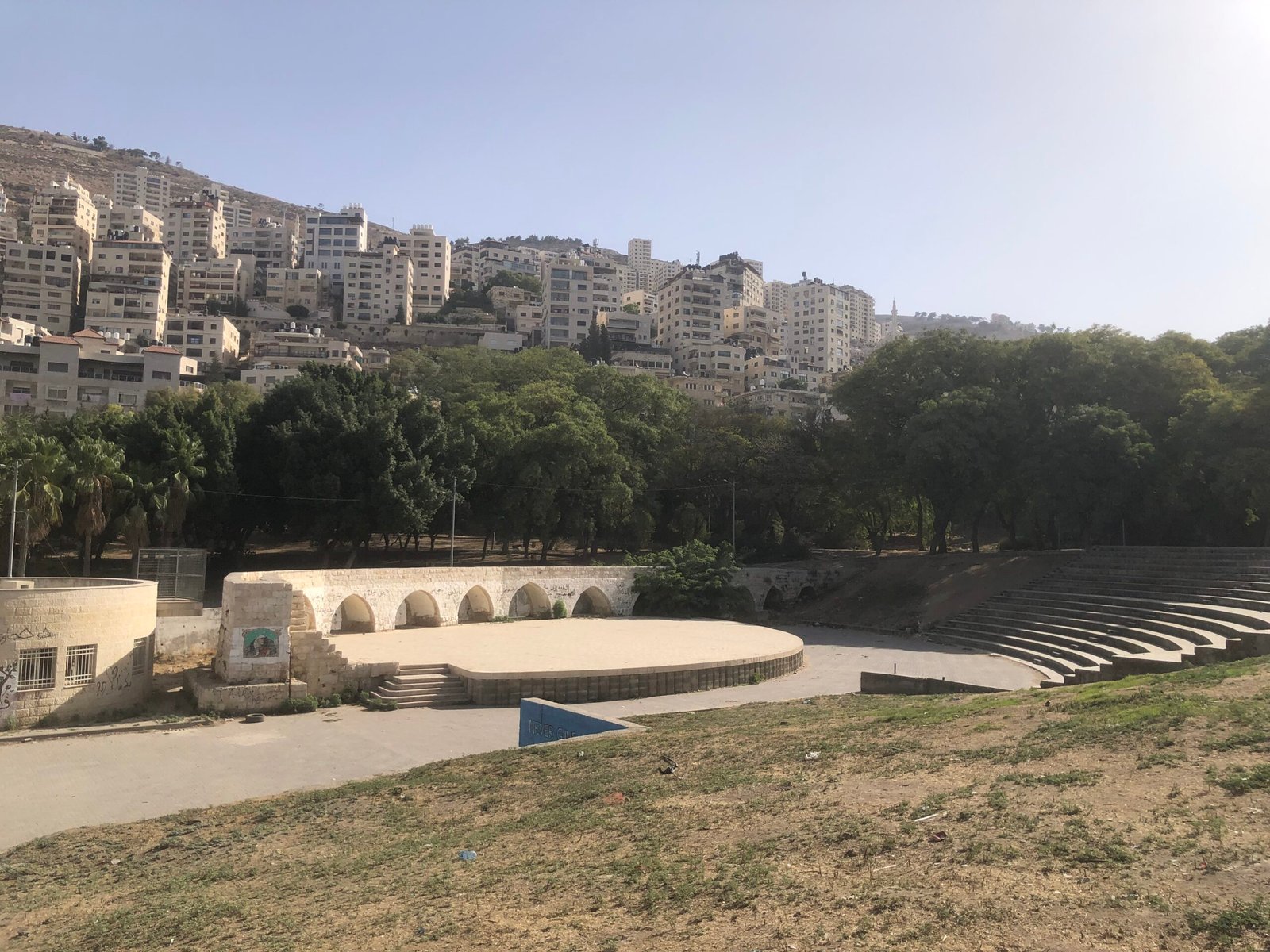
This project aims to rehabilitate and enhance a section of the Jamal Abdel Nasser Gardens to strengthen the park’s role as a vibrant public facility that serves diverse social groups and improves quality of life in Nablus. The project responds to the pressing need to upgrade infrastructure, expand green spaces, and provide recreational, educational, and cultural amenities that meet the needs of residents and visitors alike.
Site Information
- Location: Jamal Abdel Nasser Gardens, Nablus City
- Ownership and Management: Provided by Nablus Municipality – Engineering Department
- Urban Significance: The park occupies a central strategic location in the city and represents a large public space requiring rehabilitation to function as a multifunctional urban oasis for both residents and visitors.
Project Objectives
The rehabilitation of Jamal Abdel Nasser Gardens is envisioned as an advanced urban intervention combining sustainable design, recreation, and community-oriented cultural activities. The project aims to enhance quality of life and local development in line with Nablus Municipality’s vision of a sustainable, multi-use urban space. Specific objectives include:
- Upgrading park infrastructure and modernizing facilities in accordance with contemporary safety and accessibility standards.
- Expanding green areas and implementing a sustainable irrigation system.
- Providing recreational and sports facilities for children, youth, and seniors.
- Establishing cultural and service amenities, including kiosks and shaded seating areas.
- Enhancing environmental and aesthetic quality in surrounding residential areas.
- Supporting community participation and encouraging schools and institutions to use the park for educational and cultural activities.
- Promoting residents’ mental and physical well-being by providing a healthy environmental retreat.
Proposed Design Components
Infrastructure Upgrades:
- Rehabilitation of pathways and walking trails.
- Installation of energy-efficient modern lighting.
- Maintenance and improvement of sanitation facilities.
Green Space Development:
- Planting native trees and vegetation.
Installation of smart and sustainable irrigation systems. - Creation of seasonal flower gardens.
Recreational and Sports Facilities:
- Safe playground areas for children.
- Small-scale courts for football, volleyball, and tennis.
Cultural and Service Amenities:
- Kiosks for coffee and light snacks.
- Shaded seating areas and picnic zones.
Safety and Security Measures:
- Installation of surveillance cameras.
Presence of security patrols or collaboration with municipal authorities to ensure safety.
Urban and Social Justifications
- The park’s infrastructure requires improvement due to aging facilities and declining usage.
- Enhancing green spaces and parks contributes to improved public health and quality of life.
- Provision of safe play areas for children and resting zones for families and seniors.
- Transforming the park into an attractive destination for families and visitors.
- Improving the city’s aesthetic and environmental quality while raising awareness about the importance of preserving public spaces.
Expected Outcomes
- Provision of a multifunctional urban space for recreation, sports, and cultural activities.
- Enhanced quality of life and improved mental and physical health for residents.
- Increased environmental and cultural awareness within the local community.
- Support for community participation and inclusion of all social groups, including people with disabilities.
- Enhanced aesthetic and urban quality of the city and increased attractiveness of the park as a civic landmark.